Open post

Top 5 Tips to Get Better at Composing

Whether you’re just starting out at composing or have been writing music for decades, improving your composing skills can help you find greater technical mastery, artistic fulfillment, and career success.

Deliberately developing your composing skills is especially important if you’re not yet as good of a composer as you hope to be (which describes most of us composers).

That said, the “best” way to get better at composing depends on what you're trying to improve. 

Here are five suggestions:

1. Mastering Specific Techniques

Specific techniques are most easily practiced in isolation. This is why universities teach specific courses on harmony, ear training, counterpoint, orchestration, film scoring, etc.

If you want to learn the full suite of standard compositional skills, a university degree is a good option — but it’s not the only one.

Nowadays, you can also learn any of these topics from online courses and teachers, both paid and free. So, for instance, if you feel fine with your counterpoint chops, but what to deepen your orchestration skills, you can, say, follow Thomas Goss at Orchestration Online or study IU’s Instrumental Studies for Eyes and Ears.

That said, composing cannot be reduced to isolated techniques. The next level of mastery is understanding how these techniques work together.

2. Mastering Existing Styles or Creating Your Own

Style is the most basic way that musical elements work together. Simply put, musical style is the specific combination of characteristic timbres, rhythms, harmonies, textures, and forms that give a piece its unique sound.

Whether you want to write in existing styles or to create your own, here are four good options for learning style:

  • Copy scores or transcribe recordings. At its best, these practices force you to notice all the little details in a piece. However, if you copy scores mechanically, you’ll mostly just improve your notation software or penmanship skills without learning much about the music itself. Likewise, transcribing works best when you slowly increase the difficulty to match your ability.
  • Score study. Without copy scores or transcribing recordings, you can still learn a lot by simply studying the score. Although solid theory chops greatly help, you don’t need a theory PhD to do this. You just need keep an eye out for patterns and trends.
  • Writing pastiches. One of the best ways to learn a particular style is to try writing in it. Take the elements you learned from score study and replicate them using your own pitches/rhythms. Mastering pre-existing styles is one path to developing one’s own style.
  • Experimenting with unusual materials. This is the route most commonly found in university composition courses. Working with unusual sounds gets you out of our comfort zone and forces you to imagine possibilities you otherwise wouldn't have.

Many composers develop their own style using combination of these strategies—but remember that developing your “artistic voice” is bigger than musical style.

3. Creating Meaningful Forms and “Magical” Moments

The chord that gives you goosebumps, an ostinato that rivets you to your seat, the tune that gets stuck in your head — moments like these are why we’re all here. We hope to experience something magical.

Music cognition research has shown that this “musical magic” is NOT a product of style. Having a “signature sound” does little to help you create these effects. Rather, musical magic happens through repetition, tension, and surprise.

As with studying style, learning how to creating meaningful forms and magical moments requires you to study how the elements of music work in coordination. 

For this, score study and analysis are a MUST. However, rather than labelling features (as in stylistic analysis), in analyzing musical magic one must focus on relationships and timing.

Though some insightful teachers and courses explain these elements in ad hoc ways, the Wizarding School for Composers is the only composition course that systematically shows the compositional processes required to create musical magic.

4. Streamlining Your Creative Process

Up to this point, we’ve been talking about ways to improve your craft. Though craft ensures you can express yourself freely, it’s the larger creative process that ensures you have something meaningful to say.

Many composers' creative processes are woefully underdeveloped, so they procrastinate and are self-critical — but that doesn't have to be you. 

The creative process has specific steps and procedures you can learn. Read Nico Muhly's “Diary” essay from the London Review of Books, Twyla Tharp's The Creative Habit, or David Usher's Let the Elephants Run for ideas. 

Your goal is to create "workflows": replicable procedures that enable you to reliably accomplish specific musical tasks. 

"Composing" is not a specific task any more than (say) “farming” or “house building” is. "Write an 8-bar melody in the style of George Gershwin" is.

5. Improving at Self-Evaluation

The tips I listed above are essential to developing a mature ability to self-evaluate. As you improve on them, you will likewise grow in confidence about your musical and artistic judgment.

Until you've developed that ability, get a teacher. They'll be able to help you understand how all these pieces fit together in a way that you cannot until you've mastered them (which takes at least a decade). 

Third, even after you've mastered them, seek feedback, and even lessons, from your peers. Composers tend to be bad about this. They think that they can or should work in isolation. The truth is that humans are social creatures, and whether is bread baking, athletics, or composing, we improve best in collaboration with each other.

Your Next Steps

Now that you've read the list, what should you do? Here are two good ways of knowing:

  1. Ask a teacher or peer who knows you and your music
  2. Follow your gut

I'm guessing (/hoping) you already have ideas — follow those.

I’m also happy to meet with composers (for free!) to talk about their music and goals and identify what next steps they can take. Feel free to schedule a call with me.

Last but not least, I'd love to hear your take:

  • Did I miss anything on this list?
  • What else would you have added?
  • What other questions do it leave?

 

Open post

Hymn Arrangement Study Party, Part 2: Workshop Replay (10/05/21)

Here are the highlights from the above replay:

  • Part 1 — Simple Harmonization
    • 0:00: Essentials of chords — Blocked, Broken/Arpeggiated, Inverted, Embellished Arpeggiations, and Embellished Blocks
    • 6:55: How (nearly) all tonal melodies embellish the tonic chord, with “If I Listen With My Heart” as a specific example (audio on YouTube)
    • 10:50: The “quick and dirty” method for harmonizing melodies — “Which chords tend to harmonize which scale degrees?”
  • Part 2 — Richer Harmonization
    • 25:30: How counterpoint gives a richer understanding of harmony than “chord progressions”
      • 25:30: . . . from a theoretical point of view
      • 29:45: . . . from a music history point of view
    • 36:26: Contrapuntal gestures in Sally DeFord’s original version (PDF) of “If I Listen With My Heart”
    • 47:45: Contrapuntal gestures in Ryan Murphy’s arrangement (PDF)
  • 🎉 56:50: A special invitation to get feedback on your own arrangements and compositions (see below)
  • Part 3 — Q+A
    • 58:15: How conscious are composers/arrangers of contrapuntal gestures?
    • 1:05:15: What are parallel fifths?
    • 1:07:40: What resources exist for learning contrapuntal gestures?
    • 1:10:29: What is a half cadence?
    • 1:17:10: D-sharp vs. E-flat in bar 15 of DeFord’s original vs. the corresponding instances in Murphy’s arrangement

Make Your Arrangements Magical

Musical magic isn’t just for Sally DeFord or Ryan Murphy. You can make it, too!

Schedule a free, 60-minute “Sorting Hat” call today. We’ll discuss your music, identify ways to make it more vivid and moving, and explore what the Wizarding School for Composers can empower you to achieve.

Open post

Hymn Arrangement Study Party, Part 1: Workshop Replay (9/28/21)

Here are the highlights from the above replay:

  • 0:00: Welcome, Introductions, and Reviewing Ryan Murphy’s arrangement of “If I Listen With My Heart.” See —
  • 11:20: How DeFord makes her melody easy to remember using Rhythmic Motives
  • 20:00: Introduction to “Melodic Voices”
  • 37:30: How DeFord gives her melody a strong sense of direction using “Step Progressions” and “Guide Tones”
  • 54:10: Q+A
    • 54:10 How to incorporate a cappella sections into arrangements
    • 1:03:50 How much of the melody to include in an accompaniment
    • 1:10:15 When to feature which vocal parts in the arrangement
    • 1:17:45 A resource to reinforce these concepts: The free “Write Memorable Melodies—Today” PDF . . . download below!

P.S. — By popular demand . . .

By popular demand, the discussion in yesterday’s workshop will be continued in a “Part 2” workshop on October 5, 2021, at 1 PM Mountain/3 PM Eastern. Click here to join that “Part 2” workshop and get the zoom link.


Open post

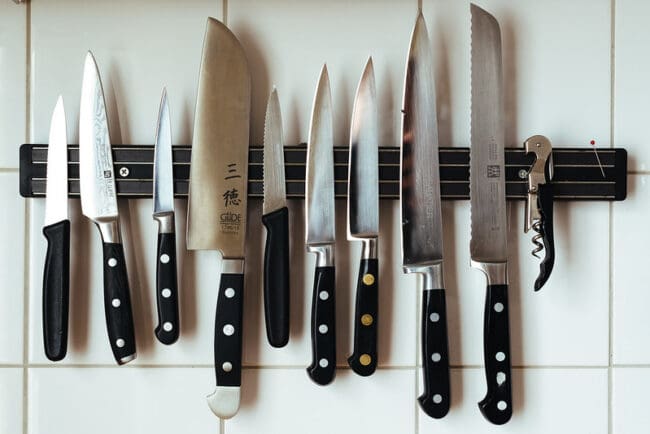
Musical Variation Is Like a Good Set of Kitchen Knives

Variation in music is like having a good set of kitchen knives.

  • If you use them properly, cooking becomes easy and fun . . .
  • If you use them carelessly, somebody loses a finger . . .

Likewise, in composing music, variation is NOT inherently valuable.

How you use it makes the difference between

  • Giving your audience goosebumps . . .
  • Or making them fidget, cough, and check their watch . . .

Less deadly to be sure, but still deeply disappointing.

To use another cooking metaphor, wantonly adding variation to your music is like using too much salt — it makes your audience want to spit it out.

In short, musical variation is essential, but it is NOT inherently valuable.

(Photo credit: flickr.com/photos/stijnnieuwendijk/)

Open post

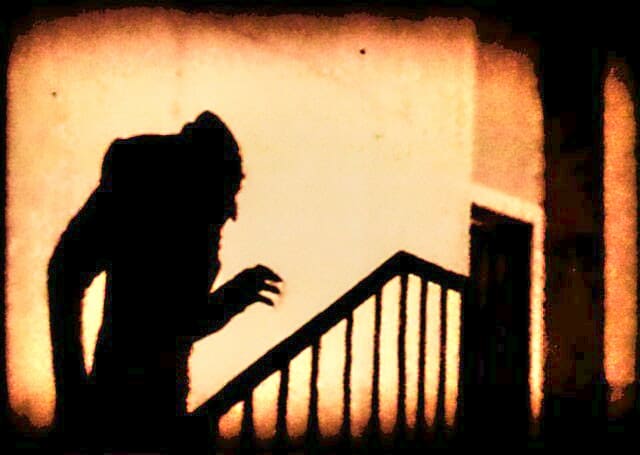
Fact: Your Brain Thinks Music Is a Horror Film

Strange but true: As far as your body is concerned, all great music is the equivalent of a horror film.

“Takes my breath way,” “held me spellbound,” “gave me goosebumps”—these are the physical reactions we crave in music.

These reactions are also literally our physiological fear responses.

How does music transform our fears into pleasure?

Let me explain . . .

What is Musical “Sleight of Hand”?

It has to do with one of the Four Elements of Musical Magic: “Sleight of Hand.”

“Sleight of Hand” has to do with “music in time” (as opposed to “World Building”—the abstract “sound” of a passage or piece).

This means that “Sleight of Hand” is roughly equivalent to musical form. But it’s more than that.

Often when people talk form, they think of textbook “Forms”: Sonata form. Binary form. Ternary form. Rondo form. Song form. etc.  Or perhaps they describe it using letters to represent repetitions: AABA, ABAC, etc.

Meanwhile, the really ambitious incorporate tonal centers or draw Schenkerian diagrams.

All of these ways of thinking about form are useful, but they can miss the mark. Too often, they reduce form to a question of matching models or filling in boxes.

They can fail to ask questions like, “Why are we filling in boxes in the first place?”

“Sleight of Hand” has an answer for that, and it comes from the field of music cognition.

How Does Music Cognition Research Explain and Expand the Definition?

More than simply another name for form, “Sleight of Hand” is the art of misdirection.

It’s how we, as musical magicians, focus our audience’s attention one way so that we can surprise and delight them with what they’re not seeing we’re meanwhile doing the other way.

Repetition is the great “misdirection” that allows us to create tension and surprise.

According to scholar David Huron, surprise and tension play on our general psychology of expectation—the same psychology which induces flight, fight, and freeze responses to fear.

The physical reactions we crave in music (“takes my breath way,” “held me motionless,” “gave me goosebumps,” etc.) are ironically our bodies’ fear responses. Whether its music (good) or a physical threat (bad), this is how our bodies respond to uncertainty.

Likewise, though the familiar can feel boring, it also feels psychologically safe and reassuring.

The Takeaway

Here’s what this all means for us as composers: If you cannot carefully manage your repetitions, any tension you try to build will end up flaccid and any surprises you try create will come out underwhelming.

This, then, is the meaning of musical “Sleight of Hand”: creating the repetitions that allow for compelling tension and powerful surprises.

Open post

Beethoven says, “You should be studying scores!”

Last night, my mind was slightly blown while listening to Beethoven’s “Tempest” Sonata.

The piece plainly exhibited example after example of the World Building and Sleight of Hand magic I teach in the Wizarding School. It was a masterclass in how to obtain musical excellence.

And here’s the best part . . .

Beethoven’s music wasn’t saying, “This level of achievement is only for ‘geniuses.’ Ordinary folk like you need not try.”

Quite the opposite.

It was saying, “Here are all my secrets! Please, have them! They’re yours for the taking—if you want them.”

Whether you just started composing during the pandemic . . . or you’ve been composing for decades, the fastest way to make your music more vivid and richly nuanced is score study.

Score study makes theory and musicianship skills concrete for those still starting out. It helps you see that theory is *not* a formula for how music works, but simply a vocabulary to describe what you hear with precision.

It further helps you see that these “what” and “when” labels are not an end in themselves, but the springboard for the far more revealing “why” and “how” questions.

As those skills become increasingly intuitive and invisible, score study remains eye-opening and enlightening.

It becomes a dialogue with other musicians. You begin to paraphrase and read between the lines of what they wrote or played. What you compose becomes a response to that insight.

Thomas Adès reflects this idea when he says, “You have to think of the great composers as your friends. They might be frightening friends, but still friends anyway.”

That’s why, even though I have a PhD from a top-tier university, I still watch scores on YouTube every day. Because, like getting married, receiving a music degree is just a waypoint, not a final destination.

So, whether you have many music degrees or none at all, how do you make score study a part of your routine?

Open post
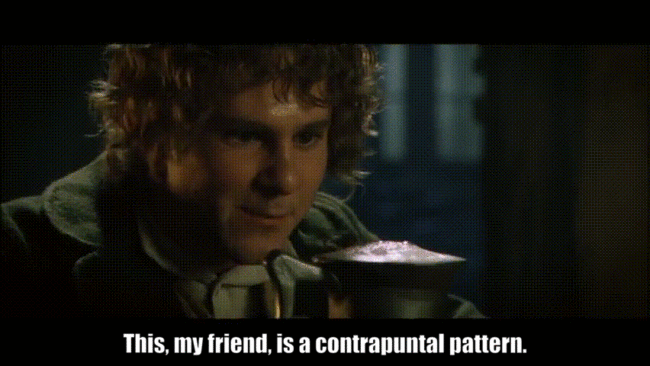
"This, my friend, is a contrapuntal pattern!"

Get Better at Counterpoint with This One Centuries-Old Trick

FACT: In classical music, chord progressions are a byproduct of contrapuntal gestures. As a Paris Conservatory professor once said, “Harmony is a fairy tale told about counterpoint.”

This is no “chicken or egg” question.

For more than 500 years, beginning with medieval chant, European musicians thought in terms of melodic lines. It wasn’t until 1722 that they started talking about “chords” as we do today. (And it took a further 200 years for the modern concept of “chord” to predominate.)

Instead, they thought of “harmony” as the intervallic relationships between melodic lines.

In this conception, any single vertical sampling of intervallic relationships (what we’d call a single “chord”) was . . . kind of meaningless.

Isolating a single “chord” would be like looking at an extreme close up of an eye or nose, rather than seeing a person's full face, let alone their entire body.

For the pre-20th century musician, harmony only made sense in the context of melodic fragments.

In fact, young musicians’ “theory training” consisted of them learning how to infer the missing parts from a single melody.

Over the course of hundreds of “partimenti” and “solfeggi,” they learned which bass line fragments went with which soprano line fragments.

They learned how to string these melodic fragments together to make phrases, how to embellish them with “diminutions,” and how to flesh out the texture with additional voices.

This is why Bach could look at a fugue subject cold and immediately understand its contrapuntal implications. This skill did not mark him as a genius; it marked him as competent.

This is why Handel could write The Messiah in a month or Mozart could write the overture to Don Giovanni in one night. These feats did not mark them as uniquely inspired; it marked them as fluent.

All their lesser known peers did the same things. Even today, these are skills anyone can learn, not gifts for the few.

The 20th century’s greatest composition teacher, Nadia Boulanger, created a veritable “who’s who” of composers by teaching these contrapuntal patterns to Aaron Copland, Philip Glass, Quincy Jones, Astor Piazzolla, and dozens of other luminaries.

Lest you think this is just a fusty classical music thing, look at the highest echelons of jazz. Take Jacob Collier. He has perhaps the most imaginative harmonic ears of any musician of the past 50 years.

In interviews (and you should go listen to him—he’s both fascinating and utterly charming), Collier doesn’t talk about “chord progressions”; he explicitly talks about voice leading (i.e., counterpoint). Different pedagogical tradition. Same musical concern.

This is why in the Wizarding School for Composers I teach composers these contrapuntal patterns.

Not because we’d have time in four months for students to master them. (Hard truth: That mastery takes almost a decade.*)

But because composers can write music FASTER and MORE CONFIDENTLY when they can even just begin to hear these patterns and understand the thought process behind them.

Composers who learn to think in contrapuntal gestures become far better equipped to write richly detailed music than those who only hear chord progressions, those who think that, like snowflakes, counterpoint lacks any underlying patterns, those who try to rediscover the patterns for themselves, and those who think the patterns somehow don’t apply to their pitch-based music.

Whatever style you write, learning contrapuntal gestures will improve your music and make composing much easier.

*) This long learning curve is why you probably haven’t heard of “contrapuntal gestures.” In the 20th century, as music theory became more focused on training amateurs and college students, contrapuntal gestures were brushed under the rug. Amateurs and college students don’t want to spend a decade learning counterpoint, so teachers started looking for quick and dirty solutions to teach harmony. Over time, most of the English-speaking world forgot about the earlier tradition. Now, if you know where to look (figured bass), its vestiges are still there, but many teachers don’t seem to know why those vestiges are there or how to unlock their power.

Open post
Summer Composing Jumpstart

How You Can Jumpstart Your Composing This Summer!

For most of us, summer is peak composing season.

🎉 School’s out! Teaching’s done for the year! And (finally) the pandemic is easing up!

You may be all geared up to launch into your next choral commission, write the piece for your festival, or even finally produce that chiptune track—but with everything going on, you probably feel a bit rusty.

The inspiration may not be flowing as much as you’d like. You may even feel like you’ve forgotten how to compose.

Let’s fix that.

I’d like to invite you to my free, 5-day challenge, the Wizarding School for Composers Summer Composition Jumpstart, running June 14-18 at 1 PM Eastern (10 AM Pacific) online.

As you may know, I founded the Wizarding School for two reasons: First, to help composers make their music more vivid and magical. Second, to help their creative process become more joyful and fluid.

Over the course of the five days, I’ll be sharing proven tools for how you can

  • overcome writer’s block 💪
  • sketch faster and with more fun ✏️
  • make revising ideas feel effortless 💃
  • and more! ✨
  • Each day, you’ll also have a chance to ask questions and get personalized feedback.

By the end, you’ll have

  • a clearer idea of what your piece is about 💡
  • new methods for quickly diagnosing issues and confidently fixing them 🔍
  • and powerful strategies to keep you composing when you lack motivation 😎

Let me help you get unstuck, get inspired, and get moving on your current piece.

Make the most of your summer composing by signing up today.

I look forward to seeing you there, and may the magic of music come alive for others through you!

Open post
Middle Earth Map

What Tolkien’s World Building Can Teach Composers

Among fantasy stories, J.R.R. Tolkien’s Lord of the Rings is renowned for the depth of its world building.

Just to write the trilogy, Tolkien created extensive backstories, poems, maps, and even entire languages, including their calligraphies.

Tolkien’s world is so thorough that, even when he doesn’t share the backstory in a given passage, it still feels vivid and three-dimensional. More than just telling you that his world is magical, Tolkien conjures the feeling of magic through his stories’ rich details.

Such world building is the bread and butter of a modern musical education, too.

In conservatories and universities, all musicians learn:

  • More than a dozen scales and modes
  • Scores of chord qualities and pitch set classes
  • All the rules of and exceptions to common-practice voice leading
  • A smorgasbord of twentieth-century techniques
  • The historical backstory behind all these sounds

Many also learn:

  • The intricacies of writing counterpoint in the styles of Bach and Palestrina
  • The standard and extended techniques of all the orchestral instruments and, often, the pop and jazz ones, too
  • The ins-and-outs of electronic music recording and production

All of these sounds and techniques are the equivalent of Tolkien’s world building. They introduce students to not just one, but multiple different musical worlds.

Musicians call these different musical worlds “styles,” “genres,” or “topics.” Composition programs even teach musicians how to create new styles and proselytize the idea that such original world-building is essential to being a “good composer.”

All this should be enough to help students become confident composers, right?

Sadly, no.

For all this world-building knowledge, most musicians trained this way never become composers, and the few who do still struggle to feel like they can conjure musical magic at will.

At best, they often feel like imposters, and, at worst, they feel sheepishly impotent.

Why isn’t mastering the rules of 16th century counterpoint or the intricacies of clarinet multiphonics enough to create great music?

Because that’s like trying to conjure magic using only earth, when real magicians use all four elements: earth, air, water, and fire.

Tolkien didn’t just create a world (earth): He had a story to tell (air), inspired by deeply personal influences (fire) and channeled through effective creative processes (water).

So, yes, world building is essential. It is as key an ingredient in Tolkien’s success as a writer as it is yours as a composer.

But without the other three elements, world building is too often dead on arrival.

Open post
Fire from brazier

Do the Work of Inspiration

Inspiration is the ideal starting point and goal of all music.

That is why it’s the composer’s greatest scapegoat:

  • You may feel that inspiration is fleeting and unreliable—that it comes on its own time and in its own way.
  • You may think that inspiration is just a feeling—something you can’t always conjure with thoughts or actions.
  • You may feel that inspiration is necessary to do good work—or even to work, period.
  • You may think that inspiration comes all at once—or that it should.
  • You may feel unmotivated without it—and even justified in lacking motivation.
  • You may think that non-musical pursuits do not count as inspiration—including self-care.
  • You may reject inspiration that doesn’t fit your expectations, ideology, or assumptions—

But with all these limits you place on inspiration, is it any wonder you struggle to access it?

Inspiration can also flow as wide and powerful and constant as the Mississippi River—if you let it.

Yes, inspiration is a feeling.

But it’s deeper than that:

  • It is a collection of associations and ideas.
  • It is why you care about them.
  • It is why you believe others should care about them, too.
  • It says, “Here is something worth noticing you might not have seen,” and, “This is how the world might be.”

In short, inspiration is meaning.

That’s great news, because meaning is not some fickle feeling or finicky “higher power.”

Meaning is something you are constantly creating, every second of your life. Every mood you vibe, every thought you think, every choice you make—it’s all meaning.

This is why inspiration is one of the four elements of musical magic.

As you create meaning for and about the music you write, you increasingly know the world of your music. You progressively understand which of its details to reveal when. You steadily find yourself in a state of creative flow.

Inspiration is not merely what motivates or prompts the work—it is the work.

The work of inspiration is creating meaning that matters for the people you serve.

Do the work of inspiration.

Scroll to top